Renovation pricing is a black box. We opened it.
The same kitchen gets four bids that disagree by six figures, and nobody can say why. Avectic Build puts one consistent pricing system under the whole project: AI reads the messy inputs, rules produce the number, and the system is built so each figure can show the labor rate, quantity, and source behind it. Estimate generators guess. Ours shows its work.
Three apps, one document underneath.
Home, Bid, and Build are not three products that happen to share a logo. They are three views of the same project document — the homeowner's chair, the contractor's chair, and the GC's chair. What one decides, the others see. One document underneath means nobody re-enters, re-guesses, or chases.
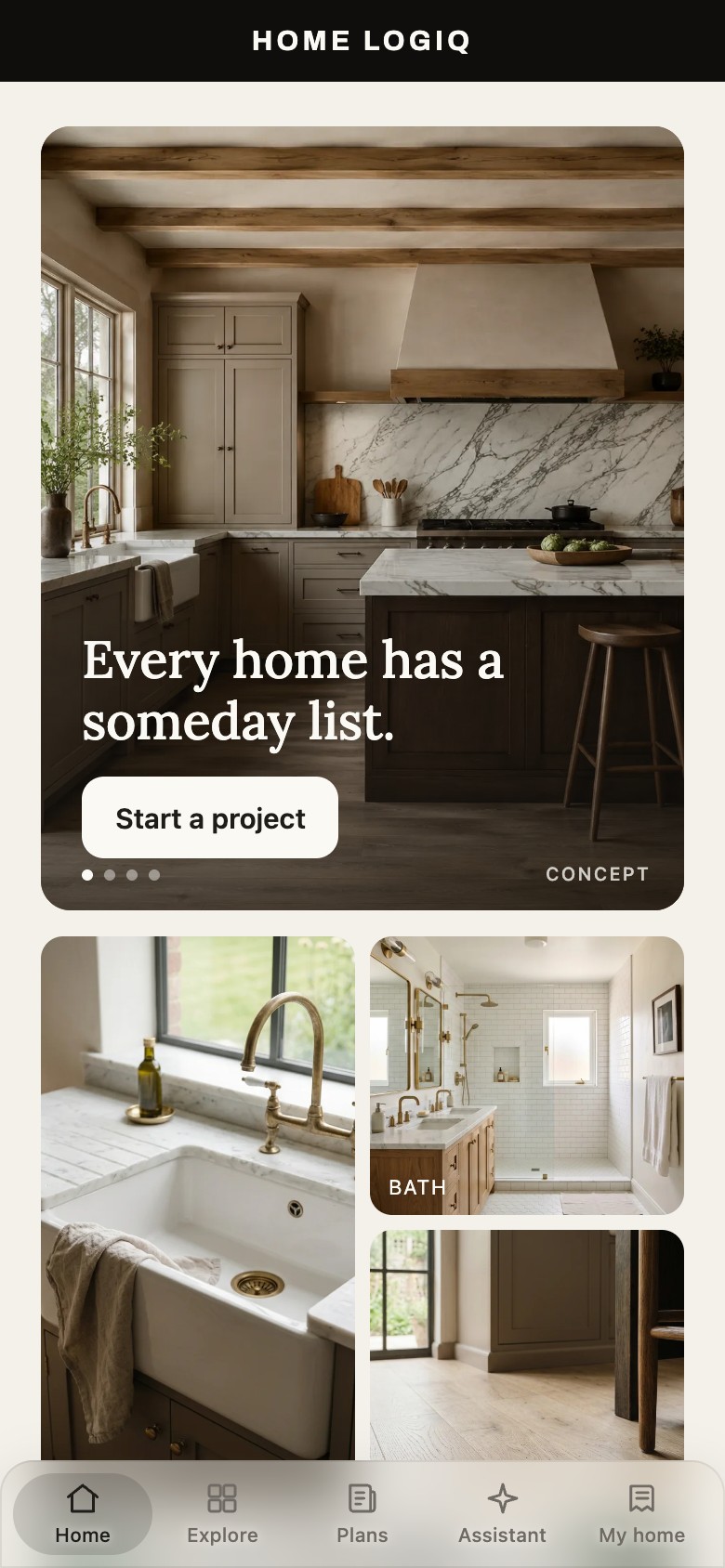
Home LogiQ
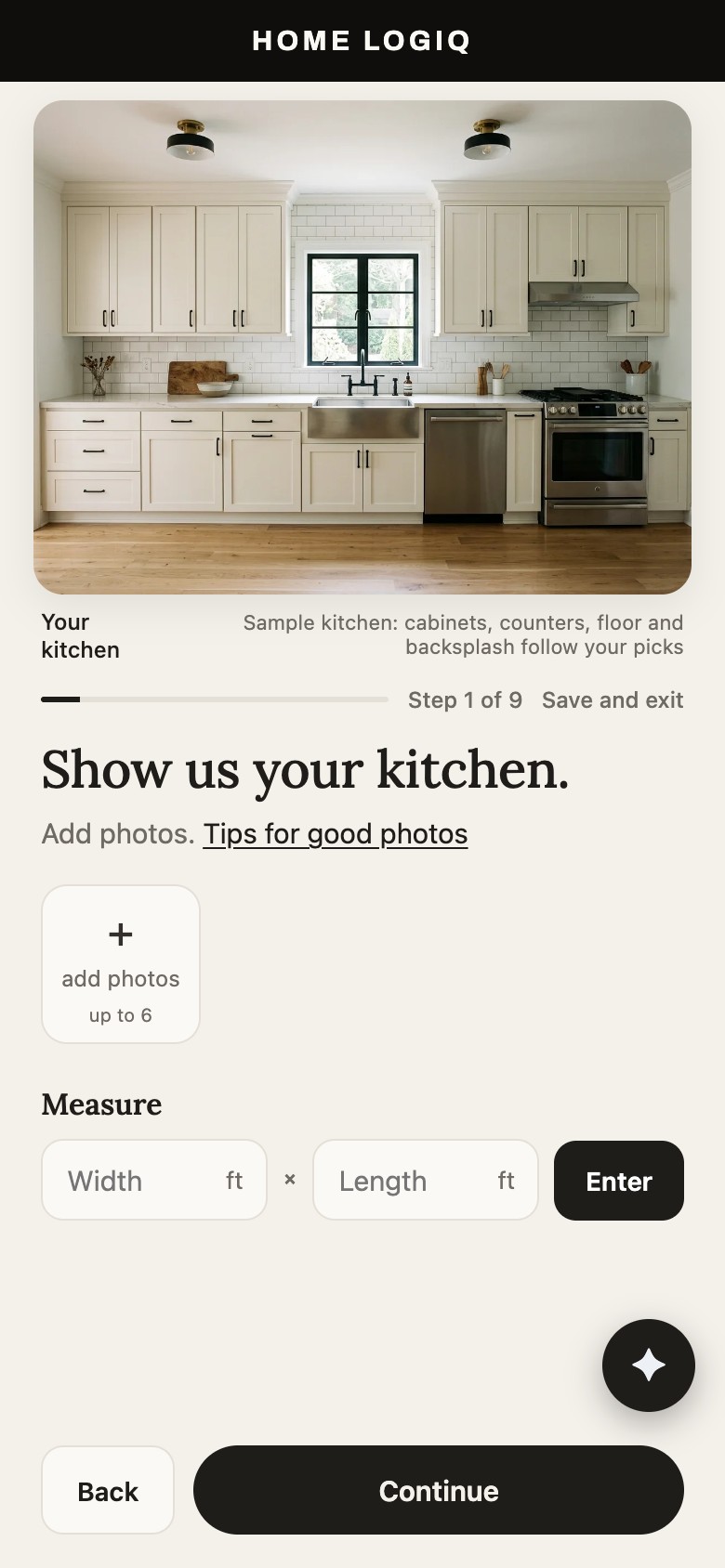
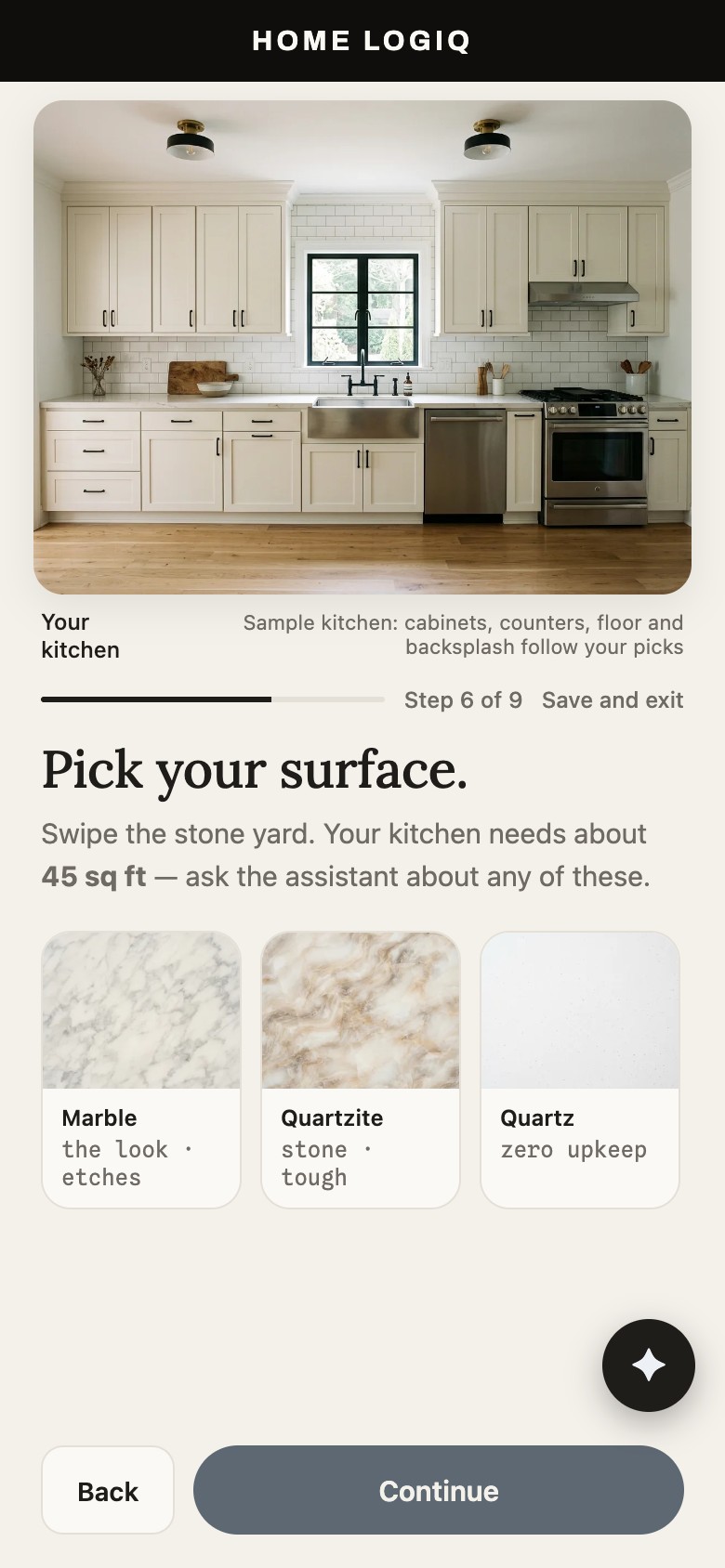
Pick a project, make the real decisions, get a priced planning summary for your actual address. Sharable as an agent-branded card at the moment a deal wobbles.
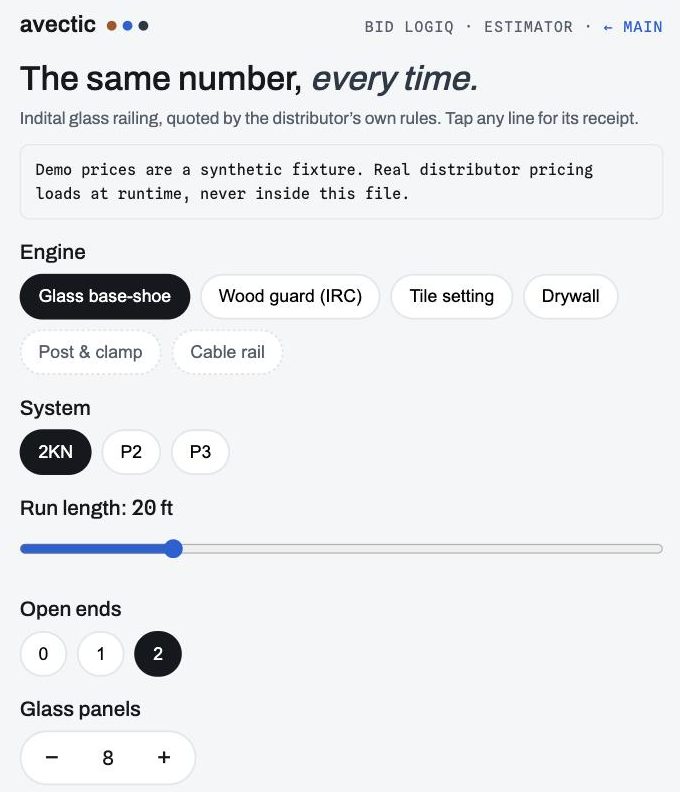
Bid
Quote by the distributor's own rules. Line-item pricing built from labor rates and quantities, not vibes — a bid a customer can interrogate, with the basis shown behind its lines.
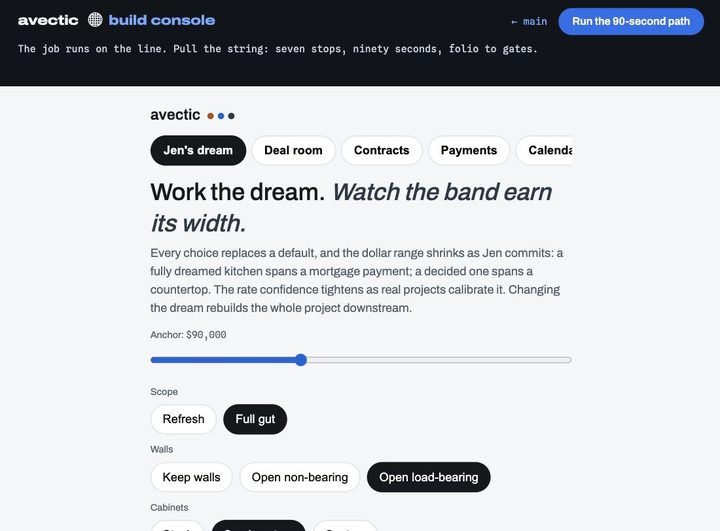
Build
The whole job on one console: the dream, the deal room, contracts, payments, calendar. The dollar band earns its width as decisions land.
The part that makes it one machine.
Dispatch is the spine the three apps share. When a homeowner commits a scope in Home, Dispatch turns it into dated, owned work. When a contractor quotes in Bid, Dispatch runs the job it wins. When a GC opens Build, Dispatch is already keeping score. It is designed so every date has an owner and money moves only when the work clears its gate. The schedule and dispatch flow run in the demo today; payment release is in development. Nobody chases anybody, because the project itself does the chasing.
Deals wobble on the renovation question. The agent who answers it wins.
A buyer hesitates on an imperfect house because the renovation number is unknowable at the moment it matters. An agent opens Home on the listing, gets a defensible range for the exact rooms the buyer is worried about, and shares it as a card carrying the agent's own name and brokerage. The buyer gets confidence at the moment of doubt. The agent gets to be the professional with an answer. The deal keeps moving — and every card shared is the agent marketing this to their next client.
Designed to compound.
One channel feeds all three doors, and every turn of the loop makes the next one stronger.
Agents share cards at the moment deals wobble. Each card reaches a buyer with the agent's name on it.
Buyers become homeowners with someday lists. Someday lists become priced, contractor-ready projects.
Projects need contractors, who meet Bid and Build — and start quoting by the rules, with Dispatch running the job.
Real bids feed calibration. Engine ranges are scored against actual project bids, and confirmed rates carry citations. The number gets more defensible with every turn.
The open seat in this market is the pricing layer itself — and sitting in it credibly requires methods that show their work. That is what we build.
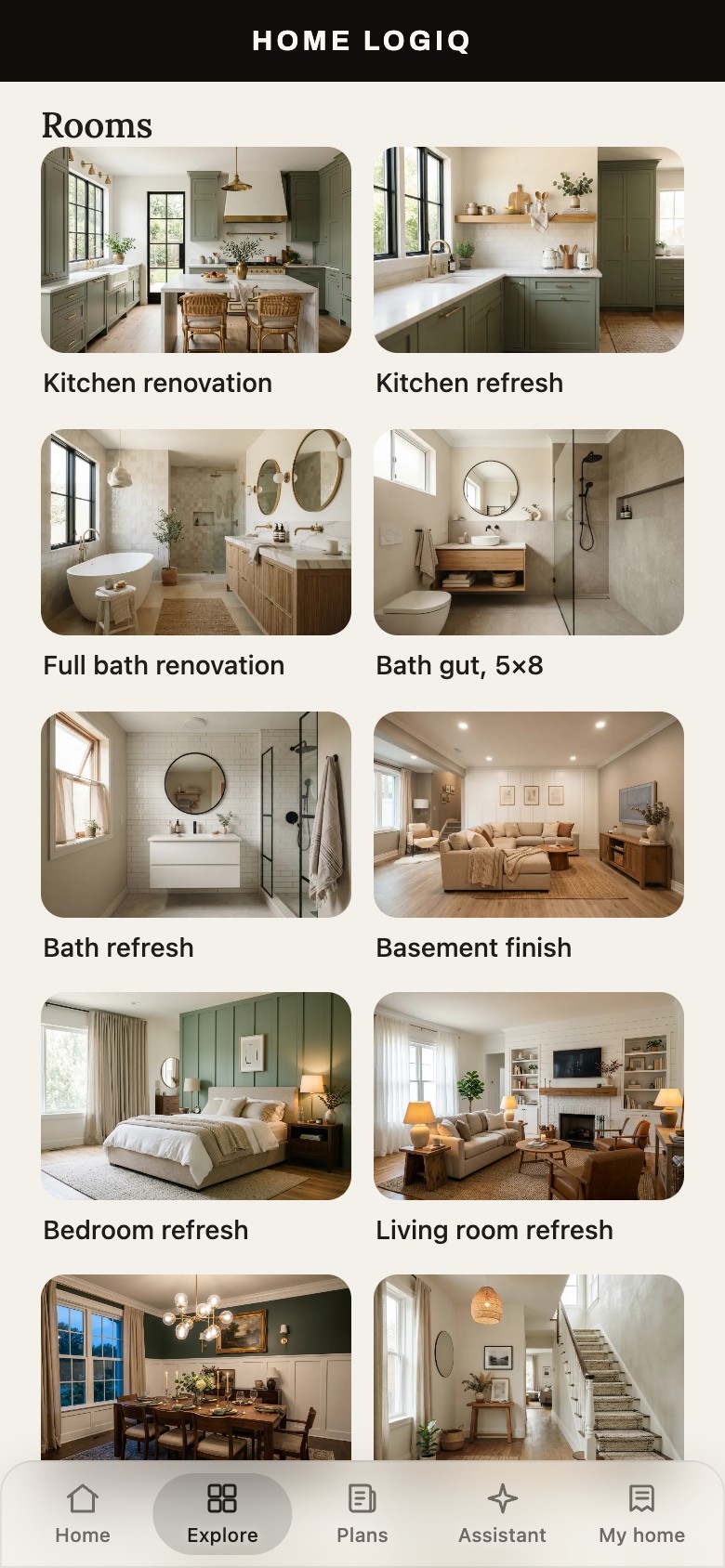
Picture the possibilities.
Explore projects, add your room measurements, and compare finishes. Current app screens shown with Home LogiQ branding; kitchen imagery illustrates a sample room.
Every chair at the table plugs in.
A renovation already runs through agents, designers, builders, and the store where the materials get bought. We are wiring each of them into the same project document — so the number, the schedule, and the money stay in one place no matter who touches the job next.
Realtors
An agent-branded card with a defensible number, at the exact moment a buyer hesitates on an imperfect house.
Builders & trades
Bids priced by the rules, jobs run by Dispatch, payment released on cleared gates instead of chased invoices.
Designers
A look becomes a scope becomes a number — specification tiers a client can actually decide between.
Stores & suppliers
Materials priced from real catalogs and regional data, with sources recorded as they are encoded.
See it on your own project.
We would rather show you usage than promise you outcomes. Ask for an invite and break it yourself tonight.